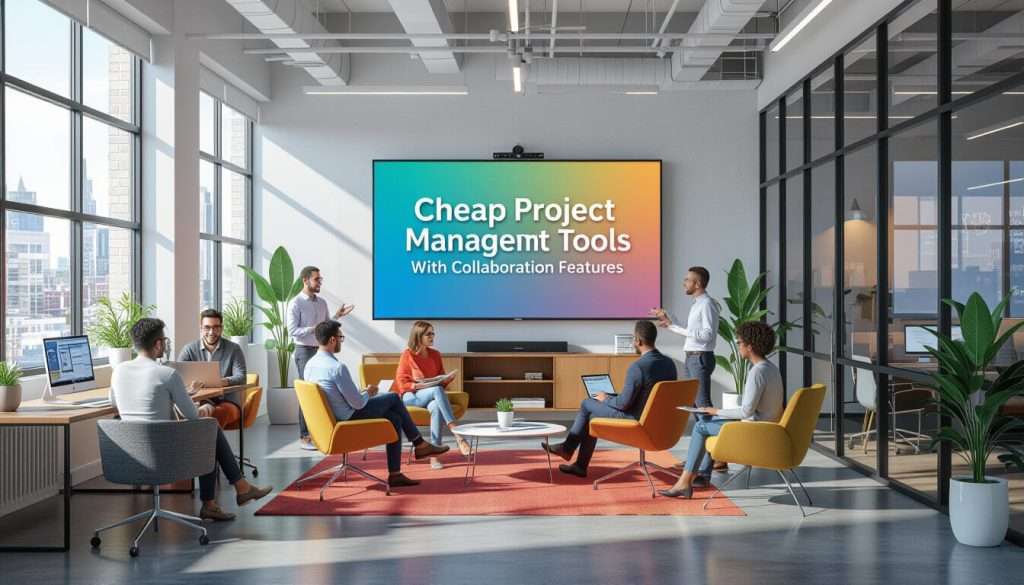
Cheap Project Management Tools With Collaboration Features
Cheap project management tools with collaboration, would normally offer excellent free or low-cost tiers, focusing on visual boards, task lists, file sharing, and communication, especially for teams on tighter budgets.
Key Takeaways On Cheap Project Management Tools With Collaboration
- Affordable project management tools like ClickUp, Asana, and Trello offer robust collaboration features without the premium price tag
- Free plans often provide sufficient functionality for small teams with basic project management needs
- Mid-range options ($5-10/user/month) deliver the best balance of cost and collaboration features for most teams
- The right budget tool depends more on your team’s specific workflow needs than on price alone
- Strategic implementation of integrations and templates can maximize the value of even the most affordable project management solutions
Finding the sweet spot between affordability and functionality is the ultimate challenge for teams seeking cheap project management solutions. The good news? You don’t need to drain your budget to keep your projects organized and your team collaborating effectively.
In today’s competitive software market, several platforms offer impressive collaboration capabilities at surprisingly accessible price points. From free options with substantial feature sets to mid-range solutions that rival their premium counterparts, there’s never been a better time to find cost-effective project management tools.
Why Expensive Doesn’t Always Mean Better for Team Collaboration
The project management software market is projected to reach $9.81 billion by 2026, with premium solutions commanding prices upwards of $30 per user monthly. But does a higher price tag translate to better team productivity? Not necessarily. Many teams end up paying for complex features they rarely use while overlooking the streamlined efficiency of simpler, more affordable options.
The reality is that expensive project management tools often target enterprise-level organizations with specialized needs. For small to medium-sized teams, these robust platforms can create unnecessary complexity that actually hinders rather than helps collaboration. The learning curve alone can set your team back weeks in productivity.
The Hidden Costs of Premium Project Management Software
When evaluating project management solutions, the sticker price is just the beginning. Premium tools often come with substantial hidden costs that can strain your budget over time. Implementation expenses, training requirements, and integration complexities can quickly double your expected investment.
Many premium solutions require dedicated administrators or consultants to maximize their potential. This specialized expertise doesn’t come cheap—adding thousands to your annual expenses. Additionally, as teams grow, per-user pricing models can lead to exponential cost increases that catch finance departments off guard.
The most overlooked hidden cost? Time. Complex systems with steep learning curves mean your team spends valuable hours configuring the tool rather than completing actual work. This opportunity cost rarely appears in budgets but significantly impacts your bottom line.
- Implementation and onboarding time (2-8 weeks for premium tools)
- Training costs ($500-2,000 per team for comprehensive training)
- Integration development expenses
- Administrative overhead
- Customization requirements
What Small Teams Actually Need vs. What They’re Sold
Project management vendors excel at selling aspirational features—the capabilities you might use “someday” but rarely need immediately. Small teams typically require a focused set of collaboration tools: task assignment, progress tracking, file sharing, and basic communication features. The rest often becomes digital clutter.
Research by Project Management Institute shows that 74% of teams use less than 30% of their project management platform’s features. This feature bloat not only affects your budget but can overwhelm team members with unnecessary complexity, reducing adoption and hampering productivity.
Free Project Management Tools With Surprising Collaboration Power
Don’t underestimate what today’s free tools can deliver. The competitive market has pushed providers to offer increasingly robust free tiers as a pathway to paid conversions. For teams with straightforward needs or limited budgets, these options provide remarkable value without financial commitment.
Trello: Simple Kanban Boards With Team Integration
Trello’s free plan supports unlimited cards, lists, and boards—providing a visual project management approach that’s instantly intuitive. The platform excels with its card-based system where teams can attach files, create checklists, assign members, and engage in task-specific conversations. While the free version limits you to 10 boards per workspace, most small teams find this more than sufficient for managing multiple projects simultaneously.
The platform’s strength lies in its simplicity and visual nature. New team members can typically jump in without training, making it ideal for organizations with fluctuating team members or volunteers. Integration with tools like Slack, Google Drive, and Dropbox extends functionality without increasing costs.
“We managed a team of 15 across three major projects entirely on Trello’s free plan for over a year. The visual workflow was exactly what our creative team needed to stay organized.” — Marketing Director at a mid-sized nonprofit
Asana’s Free Plan: What You Get Without Paying
Asana offers surprising depth in its free tier, accommodating teams of up to 15 members with unlimited tasks, projects, and messages. The platform provides multiple project views (list, board, calendar) that adapt to different working styles within the same team. Basic workflow automation features help streamline repetitive processes even without paid upgrades.
ClickUp Free Forever Plan: Most Features Without Cost
ClickUp stands out in the free project management category with its generous offering that includes unlimited tasks and unlimited members. While storage is capped at 100MB, teams can leverage multiple views including list, board, calendar, and Gantt charts—a rare feature at the free tier. The platform includes native time tracking, task dependencies, and custom statuses that adapt to your team’s unique workflow.
The platform’s 2.0 interface delivers a clean user experience that balances simplicity with powerful capabilities. Teams particularly appreciate ClickUp’s goal-tracking features, allowing members to connect daily tasks with broader objectives. For organizations managing multiple workstreams simultaneously, the free version’s Spaces feature effectively separates different departments or clients.
Best Under $5/User/Month Options
When free plans reach their limitations, the sub-$5 range offers exceptional value with expanded capabilities that eliminate most productivity bottlenecks. These affordable options typically remove storage restrictions, add integration capabilities, and introduce workflow automations that save significant time.
Notion: All-in-One Workspace at Minimal Cost
At just $4 per user monthly, Notion transforms from a note-taking app into a comprehensive project management system. The Personal Pro and Team plans unlock unlimited blocks, file uploads up to 5MB, and version history. What makes Notion particularly powerful is its flexibility—teams can build custom dashboards, databases, and workflows without coding knowledge.
Notion’s database features allow teams to create interconnected systems where project tasks link directly to meeting notes, documentation, and client information. This relational approach eliminates context switching and keeps all project information centralized. While Notion has a steeper learning curve than some alternatives, its price-to-feature ratio is unmatched for teams willing to invest in the initial setup.
Todoist Business: Clean Interface With Team Features
Todoist Business starts at just $4 per user monthly and delivers team-focused features within its famously clean interface. The platform strikes an ideal balance between simplicity and functionality with shared projects, task assignments, comments, and file attachments. For teams overwhelmed by feature-bloated alternatives, Todoist’s focused approach improves adoption rates and daily engagement.
The platform excels with its natural language processing for task creation—team members can type “Schedule client review every Thursday at 2pm” and Todoist automatically creates recurring tasks with proper dates and reminders. This intuitive approach, combined with powerful filtering and prioritization tools, makes it particularly effective for teams managing high task volumes across multiple projects.
Monday.com Basic: Visual Collaboration Without Complexity
Monday.com’s Basic plan starts at $5 per user monthly and provides a visually intuitive platform for team collaboration. The platform’s colorful status indicators and progress tracking give managers instant project visibility without complex reporting. Teams can customize boards to match their exact workflow needs, from simple task management to complex project planning.
The Basic plan includes unlimited boards and over 20 column types for customizing your project view. While automation and integration features are limited at this tier, the core collaboration capabilities—comments, file sharing, and assignee tracking—function seamlessly. Monday.com particularly shines with its mobile experience, allowing team members to update progress and communicate effectively from any location.
Mid-Range Affordable Options ($5-10/User/Month)
The mid-range category delivers the optimal balance between cost and capability for most teams. These platforms typically include advanced collaboration features, substantial automation capabilities, and robust reporting—without the enterprise-level price tag.
Teamwork: Client-Focused Collaboration Features
Teamwork’s Deliver plan ($9.99/user/month) caters specifically to agencies and client-focused teams with features designed for multi-client management. The platform includes client users who can access only their specific projects, dedicated client permissions, and branded client spaces. This client-centric approach streamlines external collaboration without compromising internal workflow efficiency. For more insights on effective collaboration tools, check out this article on project management collaboration tools.
Beyond client management, Teamwork offers comprehensive task tracking with dependencies, milestones, and time tracking. Teams particularly value the platform’s resource management features that prevent overallocation and burnout. The built-in risk register helps identify potential issues early, making it especially valuable for complex projects with multiple stakeholders.
Wrike: Enterprise Features at Small Business Prices
Wrike’s Professional plan ($9.80/user/month) delivers enterprise-grade project management capabilities at a fraction of premium solutions’ cost. The platform offers advanced features including interactive Gantt charts, resource management, customizable dashboards, and comprehensive reporting. For teams transitioning from simpler tools to more structured project management, Wrike provides a balanced learning curve with substantial capability growth.
Basecamp: Fixed Pricing Advantage for Growing Teams
Unlike most competitors, Basecamp offers a flat fee of $99/month for unlimited users—making it exceptionally cost-effective for growing teams. The platform’s project-centered approach organizes work into dedicated spaces with to-do lists, message boards, schedules, and document storage. This simplified structure creates natural workflow organization without complex configurations.
nTask: Budget-Friendly With Risk Management Features
nTask’s Premium plan ($3/user/month) delivers comprehensive project management capabilities at an exceptionally affordable price point. The platform includes Gantt charts, task dependencies, time tracking, and issue management. What distinguishes nTask is its built-in risk assessment and meeting management features rarely found in budget-friendly options.
Key Collaboration Features Worth Paying For
When evaluating which features justify additional investment, focus on capabilities that directly impact team productivity and project visibility. The right collaboration features can dramatically reduce miscommunication, prevent duplication of efforts, and keep projects moving forward consistently.
Strategic investments in specific premium features often deliver more value than upgrading entire plans. Many platforms offer add-on capabilities that can be purchased individually, allowing teams to customize their tool without unnecessary expense.
Real-Time Document Editing
Real-time document collaboration eliminates the chaos of version control issues and enables team members to contribute simultaneously to project documentation. This capability significantly reduces feedback cycles and keeps everyone aligned. When evaluating affordable project management tools, look for those that either include native document editing or integrate seamlessly with tools like Google Docs or Microsoft Office.
The productivity impact of real-time editing extends beyond mere convenience—studies show it can reduce document completion time by up to 33%. For teams working under tight deadlines, this acceleration can be the difference between meeting client expectations and missing critical milestones. Even budget-friendly options like Notion and ClickUp offer this functionality without premium pricing.
Task Dependencies and Workflow Automation
Task dependencies transform disconnected to-do lists into structured workflows where the completion of one task automatically triggers the next. This feature is essential for complex projects where timing and sequence matter. When implemented effectively, dependency management reduces bottlenecks and keeps team members from waiting idly for prerequisites to complete.
File Sharing and Version Control
Centralized file management eliminates the frustration of hunting through email threads for the latest document version. Even cheap project management tools now offer substantial storage capabilities—typically 5-10GB per workspace in the $5-10/user/month range. Beyond basic file storage, look for tools that maintain version history, allowing teams to recover previous iterations if needed.
Team Communication Tools
Contextual communication features keep conversations directly attached to relevant tasks and projects, eliminating the fragmentation that occurs when discussions happen across multiple channels. This capability creates a searchable record of decisions and reduces the information gaps that frequently occur during team transitions. While dedicated communication tools like Slack offer more features, the integrated messaging in affordable project management solutions often provides sufficient functionality for most teams.
Progress Tracking and Reporting
Transparent progress visibility motivates team members and provides early warning signs when projects begin to drift off track. Basic reporting features—available in most mid-tier project management tools—allow managers to quickly assess completion percentages, resource allocation, and potential bottlenecks without time-consuming manual tracking. For client-facing teams, these reporting capabilities translate into professional updates that build trust and demonstrate accountability.
How To Choose The Right Budget Tool For Your Team
Selecting the optimal affordable project management solution requires balancing immediate needs with long-term growth considerations. Start by documenting your team’s current pain points and workflow requirements. Are communication gaps your primary challenge? Focus on tools with strong contextual commenting and notification systems. Struggling with deadline management? Prioritize solutions with clear timeline visualization and dependency tracking.
Team Size Considerations
Team scale significantly impacts which budget tool provides the best value. For teams under 10 members, free plans often provide sufficient functionality without compromising essential features. As organizations grow beyond 25 team members, the administrative features in mid-tier options become increasingly valuable. Some platforms offer substantial discounts for annual commitments—often 15-20% below monthly rates—which can make higher-tier plans more accessible for growing teams.
Project Complexity Assessment
The complexity of your typical projects should guide your platform selection. For straightforward task management with minimal dependencies, visual tools like Trello provide intuitive organization without unnecessary features. Teams managing multiple concurrent projects with interconnected workstreams benefit from structured platforms like ClickUp or Wrike that offer Gantt views and dependency mapping. Creative teams with visual deliverables often prefer platforms with strong proofing and annotation capabilities like Asana.
Required Integrations With Existing Tools
No project management tool exists in isolation—compatibility with your existing tech stack is critical for seamless workflow. Most affordable platforms integrate with essential services like Google Workspace, Microsoft 365, and Slack, but specialized integrations vary significantly between providers. Before committing to any solution, verify that it connects with your team’s mission-critical applications, particularly customer relationship management, file storage, and communication tools.
Common Pitfalls When Selecting Cheap Project Management Tools
Even carefully selected project management platforms can disappoint if you overlook certain limitations. Being aware of common restrictions in budget offerings helps set realistic expectations and prevents workflow disruption when you encounter boundaries.
Hidden User Limits
Many cheap project management tools advertise attractive per-user pricing but implement caps on total user counts at lower tiers. This limitation can force premature upgrades when teams expand beyond these thresholds. For example, some platforms limit their entry-level plans to 10-15 users, with significant price jumps for additional members. When evaluating options, carefully review the fine print regarding user limitations and calculate the total cost based on your projected team size over the next 12-24 months.
Additionally, watch for guest user restrictions that affect client or external collaborator access. Some platforms count these limited-access users against your total allocation, while others offer separate guest user provisions. For client-facing teams, this distinction can substantially impact the effective cost of your project management solution.
Storage Restrictions
File storage limitations frequently become the first constraint teams encounter with budget project management tools. Entry-level plans typically offer 5-20GB of shared storage, which fills quickly for teams working with design assets, videos, or extensive documentation. When evaluating storage limits, consider not just your current file volume but your typical monthly growth rate and retention requirements.
Feature Limitations in Basic Plans
Affordable project management platforms commonly implement feature boundaries between pricing tiers that can unexpectedly impact workflow. Common restrictions include limits on automation rules, custom fields, reporting capabilities, and API access. These limitations often remain unnoticed during initial implementation but become problematic as teams develop more sophisticated processes. Review feature comparison charts carefully, focusing particularly on capabilities that support your team’s core workflows.
Get More From Your Budget Tool With These Strategies
Maximizing value from affordable project management tools requires strategic implementation rather than simply adopting out-of-box configurations. With thoughtful setup and team protocols, even basic plans can deliver enterprise-level organization and efficiency. For more insights, explore project management collaboration tools that can enhance your team’s productivity.
Templates and Automation Setups
Investing time in creating comprehensive templates dramatically increases consistency and reduces setup time for recurring projects. Even affordable project management tools support template creation for common workflows, task structures, and documentation formats. For teams with predictable project patterns, these templates ensure nothing gets overlooked while reducing administrative overhead. Many platforms now offer community template libraries where you can download pre-built structures for common project types, providing sophisticated setups without the configuration time.
Cross-Platform Integrations
Extend the capabilities of your budget project management tool through strategic integrations with complementary services. Tools like Zapier, Integromat, and native integration options can create automated workflows between platforms without expensive enterprise plans. These connections can compensate for missing features in affordable tiers—for example, using Google Sheets for advanced reporting capabilities or Slack for enhanced notification systems. The most effective integrations eliminate manual data transfer and create seamless information flow between specialized tools.
Team Training Best Practices
Comprehensive onboarding significantly increases tool adoption and usage consistency. Even the most intuitive project management platforms benefit from standardized training that establishes team conventions, workflow expectations, and feature utilization. Create concise documentation covering your team’s specific implementation, focusing particularly on naming conventions, status definitions, and communication protocols. Regular refresher sessions keep practices aligned as the platform evolves and new team members join.
Consider designating a system champion who maintains expertise in platform capabilities and serves as the first point of contact for team questions. This approach reduces support burden while ensuring consistent practices across projects. Many cheap project management tools offer free training resources and certification programs that can develop internal expertise without additional cost.
When It Makes Sense To Upgrade From Your Cheap Option
While cheap project management tools offer remarkable value, teams should recognize the signals that indicate when it’s time to consider more robust solutions. These transition points typically emerge when limitations begin to create workflow friction rather than merely inconvenience. Watch for increasing workarounds, manual processes to compensate for missing features, or team members reverting to spreadsheets and email for tracking. These behaviors indicate your current solution no longer adequately supports your workflow complexity. Additionally, consider upgrading when analytics reveal your team consistently operates at storage or user limits, frequently encounters permission restrictions, or when you’re managing multiple tools to compensate for gaps in your primary platform.
Frequently Asked Questions On Cheap Project Management Tools
As teams evaluate affordable project management options, certain questions consistently arise regarding capability boundaries and implementation considerations. The following responses address common concerns while highlighting realistic expectations for budget-friendly solutions.
Can free project management tools really handle team collaboration effectively?
Free project management tools can effectively support team collaboration for small to medium-sized teams with straightforward project structures. Platforms like ClickUp, Asana, and Trello offer robust task assignment, commenting, file attachment, and status tracking without cost. The primary limitations emerge with advanced reporting, extensive automation, and integration capabilities rather than core collaboration features. Teams typically encounter free plan boundaries when they need specialized workflows, custom fields, or extensive historical data rather than basic teamwork functionality.
What’s the minimum I should expect to pay for decent collaboration features?
For comprehensive collaboration capabilities that support growing teams, budget between $5-10 per user monthly. This price range typically unlocks unlimited storage, advanced permissions, custom workflows, and reporting features essential for scaling teams. While free plans offer remarkable value for basic needs, this mid-tier investment removes most significant limitations while remaining cost-effective compared to premium solutions that often exceed $20 per user monthly.
Teams should particularly consider paid plans when client collaboration becomes a priority, as these features—including client portals, approval workflows, and customized external interfaces—rarely appear in free offerings. The productivity gains from these capabilities typically justify the moderate investment through improved client satisfaction and reduced administrative overhead.
How many users can typically work on budget project management tools?
Most budget-friendly project management platforms accommodate 10-50 users before requiring enterprise plans or experiencing performance issues. Free plans typically impose the strictest limitations, often capping at 10-15 team members, while affordable paid tiers ($5-10/user/month) generally support at least 100 users with full functionality. Some platforms like Basecamp offer flat-rate pricing ($99/month for unlimited users), making them exceptionally cost-effective for larger teams.
When evaluating user capacity, consider not just current team size but your projected growth over the next 12-24 months. Transitioning between platforms creates substantial productivity disruption, so selecting a solution that accommodates anticipated expansion prevents costly migrations during critical growth phases.
Do cheap project management tools offer mobile apps?
Most affordable project management platforms now offer fully-functional mobile applications included with their free and entry-level plans. These apps typically provide core functionality including task updates, comment threads, and file access optimized for smaller screens. Mobile capability has become a standard expectation rather than a premium feature, with platforms like Trello, Asana, and ClickUp offering particularly robust mobile experiences that maintain feature parity with their desktop interfaces.
What security features should I look for in affordable project management tools?
Even budget-friendly project management tools should provide essential security protections including data encryption (both in transit and at rest), two-factor authentication, role-based permissions, and regular security audits. Most reputable platforms now offer these features at all pricing tiers, recognizing security as a baseline requirement rather than a premium offering. For teams handling sensitive information, verify that affordable options meet specific compliance requirements like GDPR, HIPAA, or SOC 2 before implementation.
When evaluating security capabilities, pay particular attention to permission granularity and external sharing controls. These features determine how precisely you can manage information access within your team and with external collaborators. The ability to set visibility boundaries at the project, task, and document level prevents accidental oversharing while enabling appropriate collaboration.
Finding the right balance between cost and capability doesn’t require compromise. Today’s affordable project management landscape offers remarkable value at every price point, with options tailored to teams of all sizes and complexity levels. By focusing on the features that directly impact your specific workflows rather than paying for unused capabilities, you can implement effective collaboration systems that scale with your organization without straining your budget.
Collaboration within projects isn’t about working more — it’s about working from a better starting point with better resources. That’s what the Project Management Toolkit Bundle offers: instant access to 3,500+ templates for $147. Don’t wait — this launch price special offer is limited and won’t return.
===========================================================================
ABOUT THE AUTHOR
Gerard Mohamed is a project management expert with over 30 years of hands-on experience managing high-stakes projects in the petrochemical and marine engineering sectors. As a volunteer within many non-profits, he has successfully implemented systems to increase the operational efficiencies of these organizations.
He holds an MBA from Business School Netherlands and a BCom (Hons) with dual majors in Project Management and Advanced Marketing. As a qualified Marine Engineer, Gerard serves as Chairman of the Cape Branch of the South African Institute of Marine Engineers and Naval Architects (SAIMENA) and sits on their National Executive Committee.
Gerard is a fully accredited Facilitator and Assessor for Project Management under South Africa’s SETA and QCTO, and teaches Project Management part-time at two leading business colleges.
After decades of struggling to find practical, field-tested project templates, he created BestProjectKits.com — a comprehensive library of 3,500+ professionally designed templates that solve real-world project challenges across 20+ industries.
→ Explore the complete template library at BestProjectKits.com
→ Connect with Gerard: [admin@bestprojectkits.com]
=========================================================================