The Significance Of Remote Team Project Template Collaboration
Remote work has transformed from a temporary solution to a permanent reality, yet 68% of distributed teams still struggle with project coordination and effective collaboration. The missing piece? A structured approach that brings clarity and consistency to virtual teamwork. Without remote team project template collaboration, information gets trapped in private messages, context is lost between meetings, and team members develop inconsistent work habits.
Key Takeaways: Remote Team Project Template Collaboration
- Structured collaboration templates can increase remote team productivity by up to 25% by eliminating communication gaps and providing clear workflows
- The most effective remote project templates include role clarity, communication protocols, and progress tracking systems designed specifically for distributed teams
- Time zone management built into templates reduces delays by creating overlap awareness and setting appropriate expectations for response times
- BestProjectKit’s customizable workflow templates offer a streamlined approach to remote collaboration that adapts to teams of any size or structure
- Implementing the right collaboration template can reduce meeting time by 30% while improving documentation and decision-making clarity
Today’s remote teams often cobble together various tools and communication channels without an underlying system to connect them. This creates information silos, duplicated efforts, and missed handoffs that frustrate team members and delay project completion. Implementing purpose-built collaboration templates solves these fundamental challenges while providing the flexibility remote teams need.
“The greatest productivity gains for remote teams don’t come from adopting more tools, but from creating clear, consistent processes that everyone follows. Templates provide the structure without limiting creativity.” – Remote Work Research Consortium, 2023
Why Most Remote Teams Fail Without Structured Collaboration
The shift to remote work happened virtually overnight for many organizations during 2020. Teams cobbled together solutions using whatever tools were available, creating a patchwork of systems that lack cohesion. Three years later, many teams still operate with this fragmented approach, leading to predictable failure points.
According to a Stanford study, remote teams without standardized workflows spend an average of 3.2 hours per week reconciling miscommunications—time that could be spent on actual productive work.
The most common remote collaboration failures stem from three key issues: undefined responsibilities, information fragmentation across multiple tools, and inconsistent documentation practices. Templates address each of these points by creating a single source of truth that guides the entire team through standardized processes.
- Unclear ownership leads to tasks falling through the cracks
- Inconsistent communication channels create information silos
- Lack of visibility into progress causes coordination delays
- Time zone challenges compound when processes aren’t standardized
- Meeting overload compensates for poor asynchronous collaboration

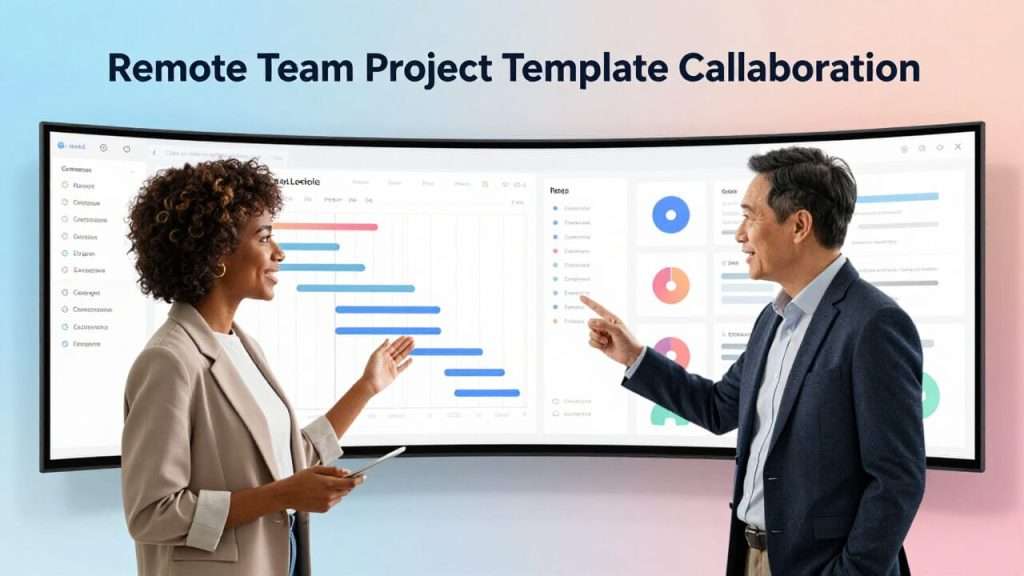
Essential Elements of Effective Remote Project Templates
Creating templates that actually work for remote teams requires more than just transferring in-office processes to digital formats. The most effective remote collaboration templates are designed specifically for distributed work, with features that compensate for the lack of physical proximity while leveraging the unique advantages of remote collaboration.
At the foundation of every successful remote project template is a structure that balances flexibility with consistency. Your templates should standardize the critical elements that keep everyone aligned while allowing for the adaptation needed as projects evolve. This balance is what makes templates sustainable long-term rather than becoming rigid constraints that teams eventually abandon.
The most valuable remote project templates incorporate elements that specifically address distributed team challenges, creating clarity where distance would otherwise create confusion. By implementing these key components, you create a framework that keeps everyone moving in the same direction regardless of their physical location. For more insights on effective templates, check out Miro’s team collaboration prework template.
Clear Role Assignments and Accountability Tracking
| Template Element | Purpose | Implementation Example |
|---|---|---|
| RACI Matrix | Define who is Responsible, Accountable, Consulted, and Informed | Embedded table at project start with team member names |
| Decision Log | Track who made what decisions and when | Running document with timestamp and rationale |
| Dependency Mapping | Clarify handoffs between team members | Visual workflow showing task relationships |
Role clarity becomes even more critical when team members can’t simply walk over to a colleague’s desk for clarification. Effective remote templates explicitly define who owns what aspects of the project, including both overall responsibilities and task-specific assignments. This prevents both task duplication and the “I thought someone else was handling that” syndrome common in distributed teams.
The best templates go beyond basic task assignments to include decision-making authority, escalation paths, and backup responsibilities for critical roles. By embedding a comprehensive RACI matrix directly in your project template, you create instant clarity about who needs to be involved at each stage, dramatically reducing the coordination overhead that often plagues remote teams.
Communication Channels and Protocols
Remote teams thrive when communication expectations are crystal clear. Effective templates don’t just track tasks—they define exactly how teams should communicate about those tasks. This includes specifying which channels to use for different types of updates, expected response times, and formats for sharing information. When these protocols are built directly into project templates, they become natural habits rather than extra work.
Your templates should distinguish between synchronous and asynchronous communication needs, with clear guidance on when to schedule a meeting versus when to use collaborative documents or messaging platforms. By embedding these communication protocols within project workflows, teams develop consistent habits that dramatically reduce coordination costs while ensuring everyone stays informed.
Task Visibility and Progress Monitoring
“Out of sight, out of mind” becomes a real challenge for remote teams without structured visibility systems. The most effective templates create transparency through embedded progress tracking that gives everyone real-time insight into project status. This visibility eliminates the need for constant check-in meetings and status update emails that consume valuable time.
Templates should incorporate visual progress indicators that provide at-a-glance understanding of project health. Whether through Kanban boards, milestone tracking, or completion percentages, these visual elements create shared awareness that keeps distributed teams synchronized. The best templates make progress visible without requiring extra reporting work from team members.
Timeline Management with Time Zone Considerations
Global teams face unique scheduling challenges that templates must address directly. Effective remote collaboration templates incorporate time zone awareness into deadlines, meetings, and handoff expectations. This might include dual time zone listings, color-coding for regional teams, and buffer time for cross-region dependencies.
Document Organization and Version Control
Information architecture becomes exponentially more important when teams can’t physically access the same files or point to materials in person. Remote-optimized templates create consistent document structures, naming conventions, and organization systems that make information instantly findable for anyone on the team. This organization system should be intuitive enough that new team members can navigate it with minimal guidance.
Version control integration is equally critical, as remote teams often work asynchronously on the same deliverables. Templates that incorporate clear document statuses, review cycles, and approval workflows prevent confusion about which version is current and who needs to provide input before work proceeds to the next stage.
5 Ready-to-Use Project Templates for Remote Teams
Effective remote collaboration doesn’t have to start from scratch. The following templates provide frameworks that you can implement immediately with your distributed team. Each addresses specific remote work challenges while maintaining the flexibility to adapt to your unique workflows. AppFlowy’s remote collaboration platform offers these templates designed specifically for distributed teams looking to improve coordination and reduce communication overhead.
1. Sprint Planning and Execution Template
Sprint-based work keeps remote teams focused on clear deliverables within defined timeframes, preventing the drift that often happens without in-person accountability. This template structures the entire sprint cycle from planning through retrospective, with clear handoffs between stages and team members. It’s particularly valuable for engineering and product development teams working across multiple time zones.
The sprint template includes dedicated sections for goal setting, capacity planning with time zone consideration, daily asynchronous stand-up prompts, and a structured retrospective format that collects feedback from all team members regardless of their working hours. By standardizing this process, teams establish rhythm and predictability that compensates for the lack of physical co-location.
- Sprint goal definition with success metrics
- Capacity planning with time zone overlap visualization
- Task breakdown with assignee RACI matrix
- Asynchronous standup format with blocker identification
- Retrospective structure with action item tracking
2. Product Development Roadmap Template
Long-term product planning requires exceptional visibility when teams aren’t physically together to reference shared artifacts. This roadmap template creates a visual timeline of product development that connects strategic goals to tactical execution, making priorities clear to everyone regardless of location. It ensures that remote teams maintain alignment on the bigger picture while working on their individual components.
The template includes timeline visualization with quarter-by-quarter breakdown, feature prioritization frameworks, cross-functional dependency mapping, and milestone tracking that highlights critical handoff points between distributed team members. By creating this shared vision, teams maintain cohesion despite physical separation and different working schedules. For more resources, explore the team collaboration prework template.
3. Marketing Campaign Collaboration Template
Marketing campaigns involve multiple creative assets, approval workflows, and precise timing—all challenges that become more complex in remote settings. This template creates a central hub for campaign planning and execution, with clear ownership for each component and visibility into how pieces connect. It’s designed to prevent the common remote work problem of siloed creation that leads to inconsistent messaging.
The structure includes campaign brief templates, content production workflows with review stages, distribution channel planning with regional considerations, and performance tracking dashboards that all team members can access. This comprehensive approach ensures that remote marketing teams maintain consistent brand voice and coordinated timing across all campaign elements.
4. Cross-Departmental Project Template
Projects that span multiple departments face compounded coordination challenges in remote environments where teams may rarely interact directly. This template creates structured touchpoints between departments with clear handoff processes and documentation requirements. It reduces the communication gaps that frequently occur when remote teams from different functions collaborate.
The template includes project charter documentation with multi-department roles and responsibilities, cross-functional dependency mapping, asynchronous update formats, escalation paths for blockers, and executive reporting structures. These elements create the framework for smooth collaboration even when teams have different working styles, tools, and schedules.
5. Client Delivery and Feedback Loop Template
Managing client relationships remotely requires exceptional transparency and communication to maintain trust without face-to-face interaction. This template creates a consistent client experience throughout the project lifecycle, from kickoff through delivery and feedback collection. It ensures that distributed team members present a unified front to clients while maintaining internal alignment.
The template structures client onboarding with expectation setting, milestone planning with client approval stages, deliverable preparation workflows, feedback collection mechanisms, and implementation tracking. By standardizing these client interactions, remote teams create predictable, professional experiences that build confidence despite the lack of in-person meetings.
- Client communication preferences and contact protocols
- Meeting cadence with agenda templates for each meeting type
- Deliverable approval workflow with versioning system
- Feedback collection forms with action item assignment
- Project health scorecard visible to both internal team and clients
Each of these templates serves as a starting point that you can customize to your team’s specific needs. The value comes not just from the structure they provide, but from the consistency they create across all team members regardless of location or working hours.
How to Customize Templates for Your Team’s Workflow
The templates described above provide solid foundations, but their true power emerges when you adapt them to your team’s specific needs. Effective customization balances standardization with flexibility, creating structures that guide without constraining. This process should involve the entire team to ensure the templates reflect actual working patterns rather than idealized workflows.
Begin by implementing a core template as-is for a small project, then gather feedback on what works and what creates friction. This iterative approach prevents spending excessive time on upfront customization that might not actually address your team’s real challenges. Remember that templates should evolve as your team learns what truly enhances remote collaboration in your specific context.
Assess Your Team’s Current Pain Points
Start customization by identifying the specific remote collaboration challenges your team faces most frequently. Common pain points include information getting lost between handoffs, unclear decision-making authority, inconsistent documentation practices, and meeting overload compensating for poor asynchronous communication. Your templates should directly address these high-impact problems rather than creating structure for its own sake.
Start Small with Core Template Sections
Begin with the most essential elements rather than trying to build comprehensive templates immediately. For most remote teams, the highest-value components include clear role definitions, communication protocols, progress tracking mechanisms, and document organization systems. These core elements create the foundation for effective collaboration while allowing flexibility in other areas.
As your team becomes comfortable with these basics, you can gradually add more sophisticated elements like automated workflows, integration with specialized tools, and advanced reporting capabilities. This incremental approach prevents overwhelming team members with too much change at once, increasing the likelihood of successful adoption.
Gathering Team Input for Template Refinement
Templates imposed without input rarely stick long-term. Schedule dedicated sessions to gather feedback from team members about what’s working and what needs adjustment. Pay special attention to input from team members in different roles and time zones, as their perspectives will highlight different collaboration challenges that the templates need to address.
Integrating Templates with Your Existing Tools
Templates shouldn’t exist in isolation from your team’s existing tool ecosystem. The most successful implementations connect templates directly to the platforms teams already use, creating seamless workflows rather than adding another disconnected system to manage. AppFlowy’s template system integrates with popular remote work tools to create this unified experience without disrupting established team habits.
Project Management Platform Compatibility
Your templates should connect directly with whatever project management platform your team already uses, whether that’s Asana, Trello, Monday, or another solution. This integration ensures that tasks, deadlines, and assignments flow automatically between your templates and the tracking system, preventing duplicate data entry and keeping information synchronized across systems.
Communication Tool Integration
Effective templates incorporate your team’s primary communication channels, creating links between discussion threads and related project documents. This connection helps prevent the common remote work problem of important decisions getting lost in chat histories. By embedding communication tool integration within your templates, you create a more complete project record that new team members can easily navigate.
Document Storage and Sharing Solutions
Templates should seamlessly connect with your document management system, whether you use Google Drive, SharePoint, Dropbox, or another solution. This integration ensures proper version control, access permissions, and organization structures that make information findable for everyone on the team regardless of when they need it or which team member originally created it.
Real-Time Collaboration Features That Make Templates Work
Even the best-designed templates fall short if they don’t support real-time interaction between team members. The collaborative features built into your template system are what transform static documents into living workspaces where remote teams truly connect. These capabilities bridge the gap between asynchronous work and the spontaneous collaboration that happens naturally in office environments.
The most effective remote collaboration happens when team members can seamlessly transition between individual focus work and collaborative sessions within the same environment. Templates that incorporate these interactive elements create the foundation for this fluid workflow, reducing the context-switching that often disrupts remote productivity.
Simultaneous Editing Capabilities
True remote collaboration requires multiple team members to work on the same document simultaneously without conflicts or version control issues. Modern template systems like AppFlowy provide real-time co-editing features that show cursor positions, highlight changes as they happen, and prevent edit collisions. This capability recreates the experience of gathering around a whiteboard, allowing spontaneous collaboration despite physical distance.
The best template systems maintain performance even with numerous collaborators, providing a smooth experience regardless of team size or geographic distribution. This performance aspect becomes increasingly important as teams scale, ensuring that collaboration remains efficient even on complex projects with many contributors.
Comment and Feedback Systems
Effective remote collaboration requires contextual discussion directly connected to the work itself. Templates should include robust commenting capabilities that allow team members to have focused conversations about specific elements rather than generic discussions in separate channels. This context-rich feedback accelerates decision-making and reduces the misunderstandings common in distributed teams.
Advanced template systems incorporate both synchronous and asynchronous feedback mechanisms, allowing team members to leave comments that persist until resolved while also supporting live chat during collaborative sessions. This dual approach accommodates different working schedules while maintaining the connection between discussion and work product.
Status Updates and Notifications
Remote teams need visibility into changes without constant manual checking or disruptive interruptions. The most effective templates include intelligent notification systems that alert team members to relevant updates based on their role and responsibilities. These notifications should be configurable to match each person’s workflow while ensuring critical updates aren’t missed.
Customizable status indicators within templates provide at-a-glance understanding of project health, task completion, and bottlenecks without requiring meetings or reports. This ambient awareness helps remote teams maintain alignment without the coordination overhead that often consumes valuable working time in distributed environments.
Template Implementation: A Step-by-Step Guide
Successful template adoption doesn’t happen overnight. The transition requires thoughtful planning and a phased approach that brings team members along rather than imposing new systems without context. The following implementation framework has proven effective across organizations of various sizes and industries, providing a structured path to improved remote collaboration.
1. Select the Right Template Structure
Begin by identifying which template addresses your team’s most pressing collaboration challenges. Rather than implementing multiple templates simultaneously, choose one that delivers immediate value in your highest-friction area. For most teams, this initial template should focus on either improving information sharing, clarifying responsibilities, or creating better asynchronous communication practices—the three areas where remote teams typically struggle most.
2. Conduct a Team Onboarding Session
Schedule a dedicated session to introduce the template and its purpose to the entire team. This session should clearly explain the problems the template solves, demonstrate exactly how to use each component, and address questions or concerns. Record this session for team members who can’t attend live, ensuring everyone has access to the same information regardless of time zone or availability.
3. Run a Pilot Project
Select a small, self-contained project to test the template with minimal risk. The ideal pilot involves a subset of your team working on a non-critical initiative where they can experiment with the new approach without pressure. This controlled environment allows for learning and adjustment before wider implementation.
During the pilot, designate a template champion who monitors adoption, collects real-time feedback, and provides support to team members as they adapt to the new workflow. This champion should have dedicated time to fulfill this role properly, as their active involvement significantly increases the likelihood of successful implementation.
4. Gather Feedback and Refine
After completing the pilot project, conduct a focused retrospective specifically addressing the template’s effectiveness. Ask team members what worked well, what created friction, and what modifications would improve their remote collaboration experience. This feedback should be systematically documented and prioritized to guide template refinement before wider rollout.
5. Scale Across Teams
Once you’ve refined the template based on pilot feedback, begin expanding implementation to additional teams or projects. This expansion should happen gradually rather than all at once, allowing the organization to absorb change at a sustainable pace. As adoption grows, create a central repository of template best practices, examples, and customization options that teams can reference as they implement.
Your Next Steps: Transform Your Remote Workflow Today
Remote team project template collaboration doesn’t need to be chaotic or frustrating. By implementing structured templates that address the unique challenges of distributed teams, you can create the clarity and consistency that drives exceptional results regardless of physical location. Start with one high-impact template area, involve your team in customization, and build a collaboration system that grows stronger with each iteration. AppFlowy’s template library offers the perfect starting point for teams ready to transform their remote workflow with proven collaboration frameworks.
Frequently Asked Questions About Remote Team Project Template Collaboration
As you implement collaboration templates with your remote team, you’ll likely encounter questions about best practices, potential challenges, and optimization strategies. The following answers address the most common concerns teams face during this transition, providing practical guidance based on experience across hundreds of remote organizations.
These insights will help you navigate the implementation process more smoothly while setting realistic expectations for your team. Remember that template adoption is a journey rather than a destination—continuous refinement based on your specific team dynamics will ultimately create the most effective collaboration system.
How long does it typically take to implement a new project template?
Most teams can implement a basic collaboration template within 2-3 weeks, including initial setup, team training, and completion of a pilot project. However, reaching optimal efficiency with the template typically takes 30-60 days as team members develop new habits and refine workflows. The implementation timeline varies based on template complexity, team size, and how significantly the template differs from existing processes. Starting with a simpler template focused on one specific collaboration challenge usually accelerates adoption compared to attempting comprehensive transformation all at once.
For the fastest implementation, prioritize templates that solve immediate pain points your team has explicitly identified rather than introducing ideal but unfamiliar workflows. This practical approach builds momentum through visible improvements that motivate continued adoption and refinement.
Can project templates work for teams in multiple time zones?
Not only can templates work for globally distributed teams—they’re actually essential for effective cross-time zone collaboration. The key is selecting templates specifically designed with asynchronous work in mind, featuring clear handoff documentation, time zone visualizations, and expected response time guidelines. These elements create the structure that allows work to flow smoothly between regions without requiring real-time coordination. The most effective global templates include built-in buffer time for cross-region dependencies and clearly defined processes for moving work forward when teammates are unavailable.
What if some team members resist using templates?
Resistance usually stems from one of three concerns: fear that templates will limit creativity, concern about additional administrative burden, or anxiety about changing established work patterns. Address these specifically by involving resistant team members in template customization, demonstrating how templates actually reduce overhead rather than creating it, and implementing changes gradually. Start with templates that solve problems these team members have personally experienced, creating immediate value that demonstrates benefits rather than theoretical arguments. In particularly resistant environments, consider using a peer champion approach where enthusiastic early adopters help demonstrate value to more skeptical colleagues.
Should I use different templates for different types of projects?
Yes, different project types often benefit from specialized templates tailored to their unique workflows and deliverables. However, maintain consistent core elements across all templates—such as role definitions, communication protocols, and document organization—to create a unified team experience regardless of project type. This balanced approach provides the structure that keeps remote collaboration consistent while offering the flexibility different work requires. Most organizations find that having 3-5 project-specific templates covers 80% of their work, with occasional custom templates for truly unique initiatives.
How often should we update our project templates?
Plan formal template reviews quarterly, but also create a simple mechanism for team members to suggest improvements anytime they encounter friction. This balanced approach ensures templates evolve with your team’s changing needs while preventing constant disruption from too-frequent changes. The most successful template implementations treat these documents as living artifacts that gradually improve through regular use rather than static structures implemented once and forgotten. After major organizational changes or significant shifts in how your team works, schedule additional review sessions to ensure templates still align with current needs and priorities.
The goal of templates isn’t perfection but rather improved collaboration and reduced coordination costs for your remote team. Even an imperfect template that everyone follows consistently will deliver better results than a theoretically perfect system used inconsistently or abandoned entirely.
If you’re tired of rebuilding the same project docs for your remote teams every time, imagine having a complete library ready to go. The Project Management Toolkit Bundle delivers 3,500+ customizable templates and 1,000+ AI prompts for just $147 — one payment, lifetime access. This launch offer includes $498+ in bonuses and is not guaranteed to last forever.
===========================================================================
ABOUT THE AUTHOR
Gerard Mohamed is a project management expert with over 30 years of hands-on experience managing high-stakes projects in the petrochemical and marine engineering sectors. As a volunteer within many non-profits, he has successfully implemented systems to increase the operational efficiencies of these organizations.
He holds an MBA from Business School Netherlands and a BCom (Hons) with dual majors in Project Management and Advanced Marketing. As a qualified Marine Engineer, Gerard serves as Chairman of the Cape Branch of the South African Institute of Marine Engineers and Naval Architects (SAIMENA) and sits on their National Executive Committee.
Gerard is a fully accredited Facilitator and Assessor for Project Management under South Africa’s SETA and QCTO, and teaches Project Management part-time at two leading business colleges.
After decades of struggling to find practical, field-tested project templates, he created BestProjectKits.com — a comprehensive library of 3,500+ professionally designed templates that solve real-world project challenges across 20+ industries.
→ Explore the complete template library at BestProjectKits.com
→ Connect with Gerard: [admin@bestprojectkits.com]
=========================================================================