
High‑Impact Innovative Project Resource Planning
A key success factor within project management is developing systems that connect goals, resources, and actions into one coordinated yet adaptable framework. High‑impact innovative project resource planning is therefore not just a scheduling exercise — it’s a competitive advantage. When traditional approaches meet the unpredictable nature of innovation, they typically crumble under pressure.
Key Takeaways: Innovative Project Resource Planning
- Traditional resource planning methods often fail innovative projects because they lack the flexibility required for creative, unpredictable work streams
- Effective innovation resource planning relies on five critical pillars: strategic allocation, talent-task matching, flexible budgeting, timeline optimization, and risk-based buffers
- Organizations that implement dynamic resource planning frameworks can achieve up to 35% better resource utilization compared to rigid planning approaches
- Successful project resource planning balances structure with adaptability through the 70-30 planning rule, providing both stability and room for creative exploration
- BestProjectKit’s resource management tools provide comprehensive solutions that transform how organizations visualize, allocate, and optimize resources across innovation portfolios
In unstable environments with limited financial resources, well-planned innovation projects make the difference between market leadership and obsolescence. The challenge lies in finding the sweet spot between rigid structure and creative flexibility that allows innovation to flourish while maintaining resource discipline.
Why Traditional Resource Planning Fails Innovative Projects
Traditional project management methodologies were designed for predictable work with clear specifications. Innovation, by definition, involves venturing into the unknown. This fundamental mismatch creates friction that can derail even the most promising initiatives.
While conventional projects benefit from detailed upfront planning, innovation requires continuous adaptation as new information emerges. Fixed resource allocations become outdated almost immediately when applied to innovative work, creating artificial constraints that stifle creativity and reduce the chances of breakthrough success.
Research published in the European Research Studies Journal confirms that organizations attempting to apply traditional resource planning to innovation projects experience 40% higher rates of resource waste and 65% more missed opportunities than those using adaptive approaches specifically designed for innovation work.
The Unique Challenges of Innovation Projects
Innovation projects come with inherent uncertainties that make resource planning particularly challenging. Unlike operational projects, the path from concept to delivery rarely follows a straight line. Teams may need to pivot multiple times, requiring different skill sets, technologies, and resources than initially anticipated.
Scope definition remains fluid throughout much of the innovation lifecycle. What begins as a clearly defined project often evolves as customer feedback, technical discoveries, and market shifts introduce new variables. This fluidity means resource needs fluctuate unpredictably, creating planning nightmares for project managers using conventional methods.
Innovation also faces unique stakeholder dynamics. Multiple departments often have skin in the game, each with their own resource priorities and definitions of success. Without a flexible, transparent project resource planning approach, these competing interests can lead to resource hoarding, political maneuvering, and ultimately, innovation failure.
“Given the critical nature that personnel and budget accuracy have on the success of a project, organizations need a project resource management solution that offers an up-to-date picture of what resources are available to allocate them appropriately.” – Project Management Institute
The Real Cost of Resource Misalignment
When project resource planning fails to match the realities of innovation work, the costs extend far beyond budget overruns. Organizations pay a steep price in opportunity costs, team burnout, and strategic disadvantages that can persist long after the project concludes.
The financial impact is substantial—studies show innovation projects with misaligned resources experience average cost overruns of 27% and take 34% longer to complete than those with appropriately structured resource plans. These inefficiencies create a drag on innovation portfolios that compounds over time.
Perhaps most damaging is the cultural impact of resource misalignment. When innovative teams face constant resource challenges—whether too few skilled personnel, insufficient tools, or inadequate financial support—they develop innovation hesitancy. This risk-averse mindset becomes embedded in organizational culture, reducing the likelihood of future innovation success regardless of resource availability.

The 5 Pillars of High-Impact Project Resource Planning
Effective innovation resource planning isn’t about creating rigid allocations months in advance. Instead, it builds upon five foundational pillars that provide structure while accommodating the unique requirements of innovation work. Organizations that master these pillars consistently outperform competitors in bringing innovative solutions to market faster and with higher returns on investment.
1. Strategic Resource Allocation
Strategic allocation begins with selective focus—concentrating resources on top-priority innovation areas rather than spreading them thinly across too many initiatives. This requires tough decisions about which projects truly align with strategic objectives and deserve the lion’s share of available resources. For more insights, explore strategies for resource allocation in project management.
1. Strategic Resource Allocation
Strategic allocation begins with selective focus—concentrating resources on top-priority innovation areas rather than spreading them thinly across too many initiatives. This requires tough decisions about which projects truly align with strategic objectives and deserve the lion’s share of available resources.
The most successful organizations implement tiered resource allocation models where breakthrough innovations receive different treatment than incremental improvements. This approach recognizes that disruptive innovation often requires more flexibility in project resource planning than iterative enhancements to existing offerings.
Resource governance plays a critical role in strategic allocation, establishing clear decision-making frameworks that determine how resources shift in response to new information. Without these governance structures, resources tend to remain locked in initial allocations regardless of changing project needs or emerging opportunities.
2. Talent-Task Matching
Innovation thrives when people’s capabilities align perfectly with project requirements. Effective resource planning prioritizes talent-task fit over mere availability, recognizing that the right person for three weeks often delivers more value than the available person for three months.
Skills inventories have evolved beyond basic competency tracking to include innovation-specific attributes like comfort with ambiguity, cross-functional collaboration experience, and creative problem-solving capabilities. These nuanced talent profiles enable more sophisticated matching between team members and innovation challenges.
The most advanced organizations maintain innovation talent pools—cross-functional groups of individuals with proven innovation capabilities who can be rapidly deployed to high-priority projects. This approach balances specialized expertise with the flexibility to redirect human resources as project needs evolve.
3. Flexible Budget Management
Innovative projects require financial flexibility that traditional budgeting processes rarely provide. Zero-based budgeting approaches, where resource requirements are reassessed at regular intervals rather than simply carried forward, better accommodate the unpredictable nature of innovation work.
Stage-gate funding models have proven particularly effective, allocating resources in smaller increments tied to specific milestones rather than committing the entire budget upfront. This approach provides natural opportunities to recalibrate resource allocation as the project develops and uncertainties resolve.
The most sophisticated organizations maintain innovation contingency reserves—dedicated funding pools that can be rapidly accessed when promising projects require additional resources to overcome unforeseen challenges. These reserves prevent resource bottlenecks from derailing potentially valuable innovations.
4. Timeline Optimization
Traditional timeline planning follows a linear path with fixed durations for each activity. Innovation resource planning requires a more fluid approach that accommodates iterative development cycles, customer feedback loops, and rapid pivots when necessary.
Effective timeline optimization establishes resource-driven decision points throughout the project lifecycle. These checkpoints trigger resource reassessments based on actual progress rather than predetermined schedules, ensuring teams can accelerate when innovations show promise or pivot when initial approaches prove unviable.
Time-boxing techniques have proven especially valuable, setting fixed time periods for specific innovation activities while allowing flexibility in scope. This approach prevents resource drain from perfectionism while maintaining momentum and creating natural opportunities for resource reallocation decisions.
5. Risk-Based Resource Buffers
Innovation inherently involves uncertainty, making traditional resource buffers inadequate. Effective innovation resource planning incorporates targeted buffers based on specific risk factors rather than generic contingencies applied equally across all activities.
Probabilistic resource modeling enables more sophisticated approaches to buffer planning, identifying specific areas of uncertainty and allocating flexible resources proportionate to both the likelihood and impact of potential challenges. This targeted approach prevents over-buffering while ensuring critical vulnerabilities receive appropriate protection.
Cross-project resource pools provide additional flexibility, allowing organizations to maintain specialized capabilities that can be deployed across multiple innovation initiatives as needs arise. These shared resource pools maximize utilization while providing essential backup for high-risk innovation activities.
Build Your Dynamic Project Resource Planning Framework
Step 1: Map Your Innovation Landscape
Before diving into project resource planning details, take a step back to understand your complete innovation portfolio. Create a comprehensive map that categorizes initiatives based on innovation type (incremental, adjacent, or transformational), strategic importance, and resource intensity. This landscape view reveals interdependencies between projects and helps identify resource bottlenecks before they become critical problems. The most effective innovation maps include timeline overlays showing when peak resource demands will occur across multiple projects, enabling proactive reallocation before constraints impact performance.
Step 2: Identify Critical Resource Categories
| Resource Category | Innovation Impact | Planning Approach | Flexibility Requirement |
|---|---|---|---|
| Core Technical Talent | Primary enabler of breakthrough innovation | Reserved capacity model with partial allocation | High – 40% unallocated time |
| Cross-Functional Expertise | Critical for validation and implementation | Just-in-time allocation with priority access | Medium – On-demand scheduling |
| Financial Resources | Enables rapid exploration and scaling | Stage-gate funding with reserve pools | High – Rolling quarterly adjustments |
| Specialized Equipment | Enables technical validation | Time-share model with priority tiers | Low – Scheduled access blocks |
Not all resources impact innovation equally. Your framework should distinguish between truly constraining resources that limit innovation velocity and supporting resources that can be more flexibly managed. For most organizations, specialized technical talent represents the most critical constraint, requiring the most sophisticated planning approaches.
Beyond identifying resource categories, define the specific capabilities that drive innovation success in your context. These may include technical expertise in emerging technologies, design thinking facilitation skills, or domain-specific knowledge that bridges customer needs with technical possibilities.
Consider creating resource influence maps that show how different resource categories impact various phases of the innovation lifecycle. These visualizations often reveal that resources critical in early exploration phases differ significantly from those needed during scaling and implementation, informing more nuanced allocation strategies. For more insights, explore strategies for resource allocation.
Step 3: Create Resource Flexibility Points
The heart of effective innovation resource planning lies in deliberately designed flexibility points—predetermined moments when resources can be reallocated based on emerging information. These decision points should align with natural project milestones but maintain enough frequency to prevent resources from being locked into failing approaches for extended periods. Effective flexibility points include specific triggers that automatically initiate resource reassessment, such as timeline slippage beyond predefined thresholds, budget consumption rates that deviate from projections, or technical achievements that open new innovation pathways. For more on this topic, you can explore project resource management strategies.
Document explicit decision criteria for each flexibility point, clarifying what information will be considered and how resource allocation decisions will be made. These criteria should balance objective performance metrics with strategic considerations to ensure resources flow toward opportunities with the greatest potential impact, not just those currently showing the strongest performance indicators. The most sophisticated approaches incorporate learning metrics that value information generation alongside traditional progress measures, recognizing that early-stage innovation success often manifests as validated learning rather than completed deliverables.
Tools That Transform Project Resource Planning
The complexity of innovation resource planning demands more sophisticated tools than traditional project management software. Modern resource planning solutions incorporate machine learning algorithms that analyze historical allocation patterns and outcomes to suggest optimal resource configurations for new innovation initiatives. These AI-enhanced tools can identify non-obvious resource dependencies and predict capacity constraints before they materialize. For more insights, explore strategies for resource allocation in project management.
Integration capabilities represent another critical advancement, with leading tools connecting project resource planning directly to strategic portfolio management, financial systems, and talent management platforms. This integrated approach ensures resource decisions reflect current strategic priorities while accounting for real-time availability constraints across the organization. Organizations that implement these connected planning ecosystems report 43% faster resource reallocation and 27% higher innovation productivity compared to those using standalone planning tools.
Visual Resource Mapping Tools
Visual mapping tools have revolutionized how teams conceptualize resource allocation across complex innovation portfolios. Heat maps that display resource utilization across teams and time periods make bottlenecks immediately apparent, while network diagrams reveal dependencies that might otherwise remain hidden. These visualization tools transform abstract resource data into actionable insights that support faster, more confident decision-making at every level of the organization.
Real-Time Resource Dashboards
The most effective resource planning systems provide real-time visibility into resource consumption patterns across the innovation portfolio. These dashboards track not only utilization rates but also innovation-specific metrics like pivot frequency, exploration velocity, and validation efficiency. By connecting these metrics to resource allocation patterns, organizations can identify which resource configurations yield the strongest innovation outcomes rather than simply maximizing traditional efficiency metrics.
Modern dashboards incorporate predictive analytics that forecast potential resource conflicts weeks before they occur, providing project leaders with sufficient lead time to negotiate solutions. These early warning systems prevent the resource crises that typically derail innovation momentum and force teams into reactive rather than strategic decision-making.
Scenario Planning Software
Perhaps the most powerful tools in the innovation resource planning arsenal are those that enable rapid scenario modeling. These applications allow leaders to simulate different resource allocation strategies and visualize their likely impact on innovation timelines, budgets, and outcomes. Advanced scenario tools incorporate machine learning algorithms that suggest optimal resource configurations based on patterns from successful past projects and external benchmarks.
The most sophisticated scenario planning platforms include collaborative features that allow cross-functional teams to co-create resource models, incorporating diverse perspectives on resource needs and constraints. This collaborative approach not only produces more realistic resource plans but also builds the cross-functional understanding and commitment necessary for successful execution when priorities inevitably shift.
Balance Certainty With Flexibility
The 70-30 Planning Rule
The most successful innovation teams follow what we call the 70-30 planning rule: 70% of resources are allocated to clearly defined activities with well-understood requirements, while 30% remain flexible for unexpected opportunities, emerging challenges, or strategic pivots. This balanced approach provides the structure needed for effective coordination while maintaining sufficient agility to capitalize on new information that emerges during the innovation journey.
The 70% structured component should focus on activities with the highest certainty—typically validation work, technical development of well-defined components, or market preparation activities. By creating resource stability for these core activities, teams can maintain momentum on foundational elements while adapting peripheral aspects as necessary.
The 30% flexible component isn’t unplanned—rather, it’s deliberately set aside for high-value, uncertain activities that may emerge. These resources might be deployed to explore unexpected technical challenges, investigate surprising customer feedback, or accelerate promising directions that weren’t apparent at the outset. Organizations that maintain this flexibility consistently outperform those that allocate 100% of resources upfront, even when initial plans appear comprehensive.
Decision Gates For Resource Reallocation
Effective innovation resource planning incorporates formal decision gates that trigger comprehensive resource reassessment. Unlike traditional stage-gates that focus primarily on go/no-go decisions, innovation resource gates specifically evaluate whether the current resource configuration remains optimal given everything learned since the previous assessment. These decision points should occur frequently enough to prevent significant resource waste but not so often that teams cannot build momentum between evaluations.
The most effective decision gate processes include explicit criteria for resource reallocation decisions, ensuring that adjustments reflect strategic priorities rather than organizational politics or sunk cost fallacies. Leading organizations develop resource reallocation rubrics that weight factors like strategic alignment, technical progress, market feedback, and team capabilities to guide objective decision-making even when emotions run high.
Measure What Matters: Project Resource Planning Metrics
Leading Indicators of Resource Health
Traditional resource metrics focus on utilization and efficiency, but innovation requires different indicators that capture whether resources are enabling exploration and breakthrough thinking. Forward-looking organizations track metrics like “creative collision rate,” measuring cross-functional interactions that generate new insights, or “exploration bandwidth,” assessing whether teams have sufficient resources to investigate alternative approaches rather than just executing the primary plan. These leading indicators provide early warning when resource constraints begin to squeeze out the exploration essential to meaningful innovation.
Resource Efficiency Ratios
While traditional efficiency metrics can undermine innovation by incentivizing predictable work over exploration, properly designed efficiency ratios still play an important role. The key difference lies in what “efficiency” means in an innovation context. Rather than measuring output per resource unit, innovation efficiency measures learning generated per resource unit. This shift transforms how teams think about resource utilization, valuing fast validation cycles and knowledge generation over sheer production volume. High-performing innovation teams track metrics like “validation velocity” (how quickly and resource-efficiently hypotheses are tested) and “pivot cost” (resources required to significantly redirect efforts based on new information).
Innovation-Specific Performance Metrics
Project resource planning effectiveness ultimately manifests in innovation outcomes. Organizations need metrics that connect resource allocation patterns directly to innovation performance. These metrics should reflect both the quantity and quality of innovation, measuring factors like novel patent generation, successful market entries, and revenue from products less than three years old. By correlating these outcome metrics with specific resource allocation approaches, organizations can identify which resource strategies deliver the strongest innovation returns in their particular context.
- Innovation Velocity Index: Measures how quickly ideas move from concept to validation with available resources
- Resource Adaptability Score: Tracks how effectively resources shift in response to learning and changing priorities
- Technical Debt Ratio: Monitors whether short-term resource decisions create long-term innovation obstacles
- Cross-Functional Collaboration Intensity: Measures the effective integration of diverse expertise in innovation activities
- Strategic Alignment Coefficient: Assesses how well resource allocation reflects stated innovation priorities
The most valuable metrics combine quantitative measures with qualitative assessments that capture the nuanced ways resources enable or constrain innovation. Regular retrospectives should examine not just whether resources were sufficient, but whether they were available at the right moments and in the right configurations to maximize innovation momentum.
Organizations that implement comprehensive measurement frameworks report significantly better resource allocation decisions and faster course corrections when initial approaches prove suboptimal. The key is developing metrics that provide actionable insights rather than simply measuring what’s easy to track.
Make Your Project Resource Planning a Competitive Advantage
The organizations that consistently bring breakthrough innovations to market aren’t necessarily those with the most resources—they’re the ones that allocate resources most effectively. By implementing the approaches outlined in this article, you can transform resource planning from an administrative exercise into a strategic capability that accelerates innovation velocity and magnifies innovation impact.
The journey toward high-impact resource planning isn’t a one-time transformation but an ongoing evolution. Start by assessing your current resource planning practices against the five pillars, identifying the largest gaps, and implementing targeted improvements where they’ll create the most immediate value. As these initial changes take hold, you can progressively adopt more sophisticated approaches that further enhance your innovation capabilities and competitive position.
Frequently Asked Questions About Innovative Project Resource Planning
Innovation leaders consistently raise similar questions about resource planning for innovative projects. Here are expert answers to the most common inquiries we receive:
How often should we revise our resource planning for innovative projects?
“Resource planning for innovation should follow a nested cadence: minor adjustments weekly, significant reallocations monthly, and comprehensive resource strategy reviews quarterly. This multi-tiered approach provides sufficient flexibility for day-to-day adaptation while ensuring regular opportunities to make more substantial shifts as projects evolve and priorities change.”
– Dr. Jennifer Whyte, Professor of Project Management, Imperial College London
The optimal revision frequency depends on your innovation type and organizational context. Early-stage, exploratory innovation generally requires more frequent reassessment—often biweekly—as new information rapidly emerges. More incremental innovation typically follows a monthly cadence, while transformational initiatives with longer horizons may use quarterly project resource planning cycles with built-in flexibility mechanisms between formal reviews.
Some organizations successfully implement event-based rather than calendar-based revisions, triggering resource reassessment when specific milestones are reached or when key assumptions are validated or invalidated. This approach ensures planning revisions happen when they’ll provide the most value rather than on an arbitrary schedule. For more insights on effective resource management strategies, consider exploring 3 strategies for resource allocation in project management.
The most effective approach combines regular cadences with exception-based reviews, maintaining a consistent planning rhythm while remaining responsive to unexpected developments that demand immediate resource reconsideration.
What’s the biggest mistake companies make when planning resources for innovation?
The most common mistake is treating innovation resource planning as a one-time exercise rather than an ongoing process. Organizations often invest heavily in initial planning, creating detailed resource models and allocation schedules, but then fail to establish mechanisms for regular reassessment and reallocation as new information emerges. This static approach fundamentally misaligns with the dynamic nature of innovation, leading to resources remaining committed to initially promising directions long after evidence suggests pivoting to more valuable opportunities. Successful innovation leaders recognize that project resource planning creates a starting point, not a fixed path, and they institutionalize regular processes to recalibrate resource allocations based on validated learning throughout the innovation journey.
How do I convince stakeholders to allocate sufficient resources for innovation?
Securing adequate innovation resources requires translating innovation activities into language that resonates with different stakeholder groups. For financial stakeholders, frame innovation as a portfolio investment with a defined risk-return profile, using option valuation models to demonstrate how initial resource allocations create valuable future possibilities even when specific outcomes remain uncertain. For strategic stakeholders, explicitly connect innovation resource requirements to competitive threats and market opportunities, showing how resource investments address specific vulnerabilities or enable participation in emerging growth areas. The most persuasive approaches combine compelling narratives about innovation’s strategic importance with disciplined processes that demonstrate responsible resource stewardship, giving stakeholders confidence that resources will be deployed effectively and reassessed regularly as new information emerges.
Can small teams implement these resource planning approaches?
- Simplified Decision Gates: Reduce formal evaluation points but maintain clear criteria for resource shifts
- Integrated Role Assignments: Have team members play multiple specialized roles rather than maintaining dedicated specialists
- Lightweight Documentation: Focus on capturing key decisions and rationales rather than comprehensive planning artifacts
- External Partnership Leverage: Use strategic partnerships to access specialized capabilities without full-time resource commitments
Absolutely — the principles of effective innovation resource planning scale to teams of any size. Small teams actually hold certain advantages, including faster decision-making, closer cross-functional collaboration, and greater visibility into resource utilization patterns. The key adjustment for smaller teams involves simplifying the governance mechanisms while maintaining the fundamental approach of balancing structure with flexibility.
Small teams should focus particularly on identifying their true constraint resources—often specific technical capabilities or executive attention rather than general capacity—and creating explicit processes to optimize how these critical resources are deployed. Rather than implementing comprehensive planning systems, small teams can achieve similar benefits with targeted practices that address their specific resource challenges.
Some of the most innovative startups maintain simple but powerful project resource planning disciplines, often using visual management techniques like kanban boards with explicit work-in-progress limits to prevent overcommitment while maintaining flexibility for emerging opportunities.
How do I integrate agile methodologies with resource planning for innovation?
Agile methodologies and effective innovation resource planning are natural complements when properly integrated. The key is recognizing that agile approaches provide tactical flexibility within strategic guardrails, not an absence of planning. Start by establishing resource planning at two levels: a strategic level that allocates resources to innovation themes or major initiatives, and a tactical level where agile teams self-organize around specific short-term objectives within those allocations.
Implement regular synchronization points where agile team progress informs strategic resource allocation decisions. These connections ensure that insights generated through agile execution cycles influence where resources flow at the portfolio level. The most effective organizations maintain rolling quarterly resource plans at the strategic level while enabling biweekly adjustments at the team level through standard agile ceremonies.
Project resource planning should explicitly account for agile practices by allocating capacity for refinement, retrospectives, and other continuous improvement activities that might otherwise be squeezed out during resource-constrained periods. These activities represent essential investments in process effectiveness rather than overhead to be minimized. Learn more about resource allocation strategies to enhance your planning process.
Finally, develop hybrid metrics that connect agile team velocity to strategic innovation outcomes, helping stakeholders understand how tactical progress translates to competitive advantage. This measurement approach bridges operational and strategic perspectives, creating a shared language that facilitates more effective resource conversations across all organizational levels.
Effective project resource planning is essential for successful project execution. It involves allocating the right resources at the right time to ensure that project objectives are met efficiently. By understanding the demands of each project phase and aligning resources accordingly, organizations can optimize their performance and achieve better outcomes.
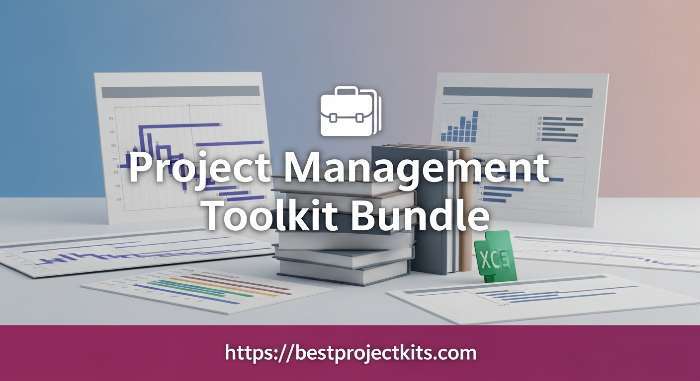
You don’t need permission to work smarter — just the right Project Resource Management system. The Project Management Toolkit Bundle forms part of that resource, priced at $147 for lifetime use. Secure it before the launch offer closes.
===========================================================================
ABOUT THE AUTHOR
Gerard Mohamed is a project management expert with over 30 years of hands-on experience managing high-stakes projects in the petrochemical and marine engineering sectors. As a volunteer within many non-profits, he has successfully implemented systems to increase the operational efficiencies of these organizations.
He holds an MBA from Business School Netherlands and a BCom (Hons) with dual majors in Project Management and Advanced Marketing. As a qualified Marine Engineer, Gerard serves as Chairman of the Cape Branch of the South African Institute of Marine Engineers and Naval Architects (SAIMENA) and sits on their National Executive Committee.
Gerard is a fully accredited Facilitator and Assessor for Project Management under South Africa’s SETA and QCTO, and teaches Project Management part-time at two leading business colleges.
After decades of struggling to find practical, field-tested project templates, he created BestProjectKits.com — a comprehensive library of 3,500+ professionally designed templates that solve real-world project challenges across 20+ industries.
→ Explore the complete template library at BestProjectKits.com
→ Connect with Gerard: [admin@bestprojectkits.com]
=========================================================================